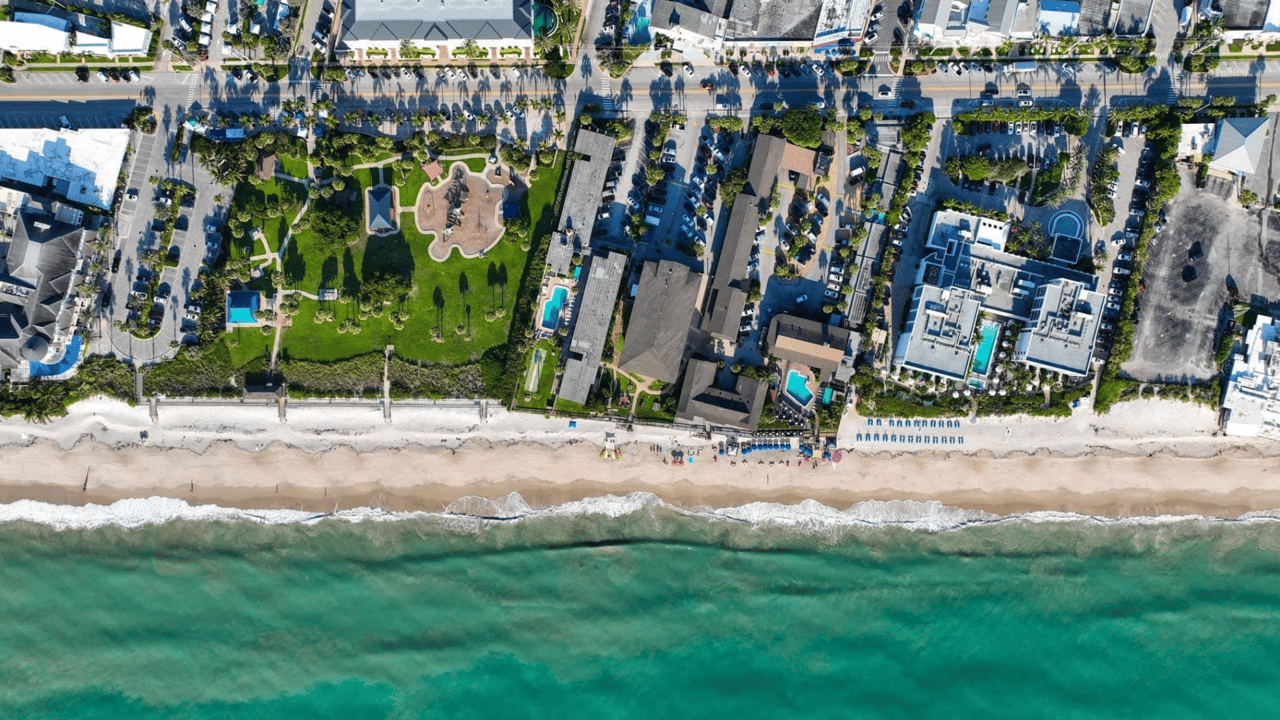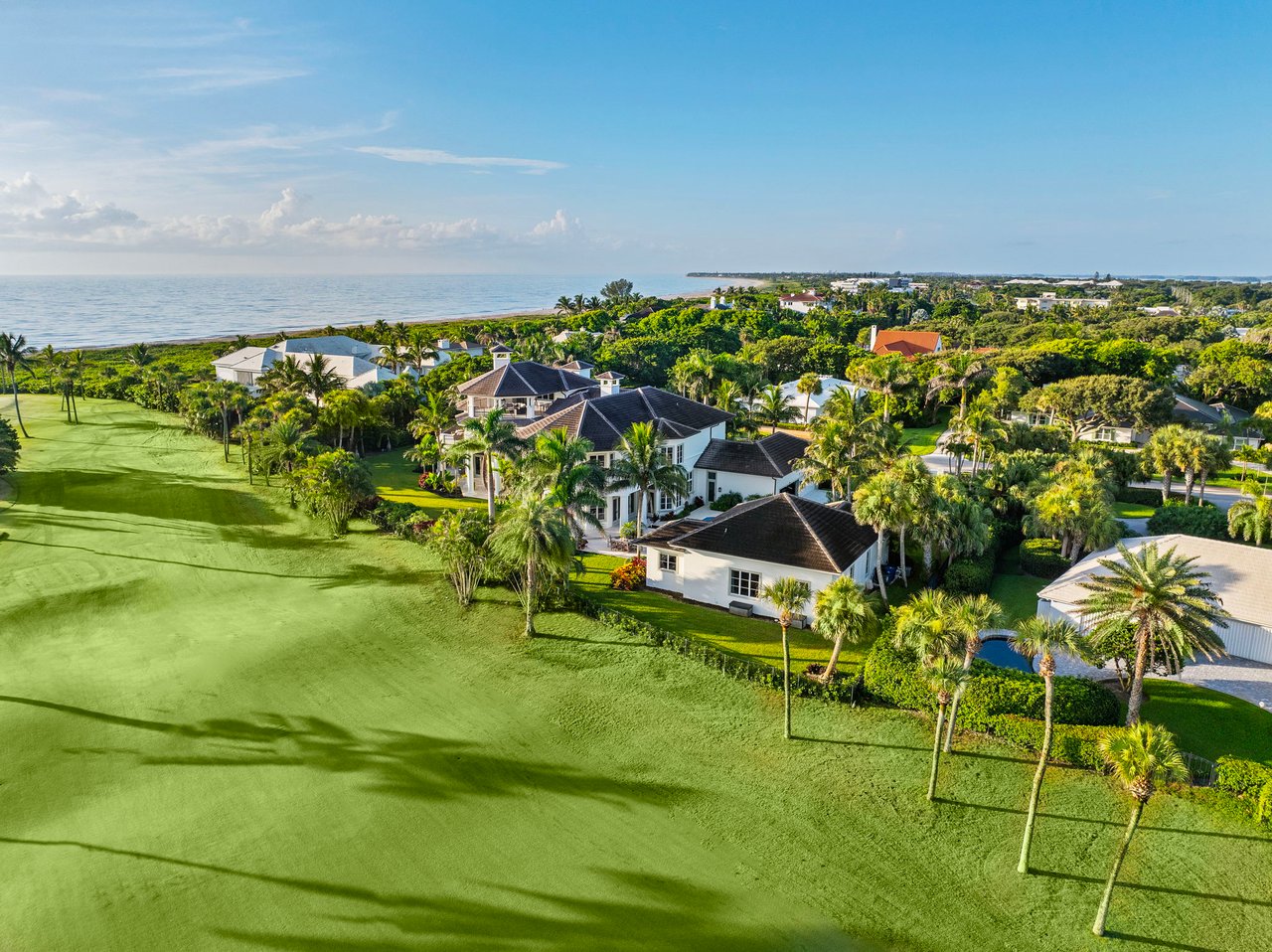
Every fall on Vero Beach's barrier island, two kinds of mail move through the same closing season. One is the property tax bill that lands on a new owner's desk after the deed records. The other, this year, is the wave of campaign material about Amendment 3, the property tax measure Florida voters decide on November 3, 2026. Read side by side, they tell two very different stories about what a buyer's tax bill will actually look like, and only one of those stories has already been decided.
That distinction matters more on the barrier island than almost anywhere else in Indian River County. ZIP code 32963 recorded roughly 174 single-family sales in the first five months of 2026 at an average price just under $2 million, and close to two-thirds of those deals closed in cash. At that price point, the gap between what a buyer assumes their tax bill will be and what it actually turns out to be is not a rounding error. It is a number worth understanding before a contract gets signed, not after.
The reset that happens no matter what
Florida's Save Our Homes provision caps how much a homesteaded property's assessed value can climb each year, limited to the lesser of 3 percent or the change in the Consumer Price Index. Over a decade or two of ownership, that cap can leave a long-time seller's assessed value far below what the home would fetch on the open market. It is one reason a listing's public tax record can look almost quaint next to its asking price.
That cap does not transfer with the house. When a homesteaded property sells, Florida Statutes section 193.155 requires the assessment to reset to full market value for the new owner the following year, and the accumulated gap the previous owner built up simply disappears from that parcel. The Indian River County Property Appraiser's own guidance on portability exists precisely because sellers, not buyers, are the ones who get to carry that savings forward, and only if they move it to a new Florida homestead of their own within three years. A buyer moving to Vero Beach from out of state has no such cushion.
This is not a provision anyone is campaigning for or against. It has been the law since the Save Our Homes amendment passed in 1992, and nothing on the November ballot touches it. A buyer closing on a barrier island home in December 2026 or June 2027 faces the identical reset either way. The only variable is how big the gap was on the specific property, which depends entirely on how long the previous owner held it and how much the island has appreciated since.
What Amendment 3 would actually change
The measure on the ballot is different in kind. On June 2, 2026, the Florida Legislature passed House Joint Resolution 1-F, sending a constitutional amendment to voters that would expand the state's homestead exemption well beyond its current level. If approved, the amendment would:
- Raise the non-school homestead exemption from $50,000 to $150,000 starting January 1, 2027, and to $250,000 starting January 1, 2028, with inflation adjustments beginning in 2029
- Leave school district taxes untouched, since the expanded exemption applies only to county, municipal and other non-school levies
- Lower the annual assessment growth cap on non-homestead properties, including second homes and investment property, from 10 percent to 5 percent starting in 2027
- Require anyone who was not a permanent Florida resident as of December 31, 2026 to wait until the fifth year of their homestead exemption before qualifying for the larger benefit
The House passed it 75-26 and the Senate 30-9, and because it amends the state constitution, it needs 60 percent voter approval in November to take effect at all. None of it changes anything about a buyer's tax bill today. The current $50,000 exemption and the Save Our Homes cap remain exactly as they are unless and until voters say otherwise.
Where the vote actually stands
This is the part getting lost in a lot of the relocation content circulating this year, which treats the December 31 residency cutoff as a hard deadline to beat. It might become one. It is not one yet.
A St. Pete Polls survey conducted for Florida Politics and released September 17, 2026, found the amendment sitting at 45 percent support among likely voters, 15 points short of the 60 percent threshold it needs. Another 30 percent opposed it outright, and a quarter of respondents remained undecided with less than seven weeks left before Election Day. The following day, Florida TaxWatch, an independent government watchdog group with no stake in either side of a real estate transaction, released its 2026 voter guide recommending a "No" vote, warning that shrinking non-school property tax revenue would eventually shift onto renters, businesses and non-homesteaded property owners if local governments couldn't absorb the loss.
That is not a prediction that the amendment fails. Undecided voters break in both directions, and a well-funded campaign can move a 15-point gap in seven weeks. But it is a real, current, in-the-field number, not a hypothetical. Anyone weighing whether to rush a Vero Beach purchase before year-end specifically to lock in a benefit that requires 60 percent voter approval should know that, as of the most recent public polling, that outcome is not a formality. Florida's Legislature has also shown this year how quickly these proposals can stall. An earlier, more aggressive version, House Joint Resolution 203, passed the House 80-30 in February 2026 with a plan to eliminate non-school homestead taxes entirely over a decade, then died in the Senate Appropriations Committee without a hearing the following month. Property tax reform in Tallahassee has moved unpredictably all year, and the amendment on this November's ballot is the product of that back and forth, not a settled inevitability.
What this means for a barrier island closing timed around December 31
If a household was already planning to relocate to Vero Beach's barrier island before the end of the year, for reasons that have nothing to do with a ballot measure, then establishing Florida residency by December 31, 2026 costs nothing and preserves the option of the larger exemption if voters approve it. That is a reasonable thing to build into a closing timeline.
What is less reasonable is treating the deadline as the reason to buy, or as a reason to compress due diligence on a barrier island home to squeeze in before year-end. The certain cost of ownership here is the Save Our Homes reset, which applies at full force whether the amendment passes or fails. On a barrier island property trading near the current island average of roughly $2 million, that reassessment alone can represent a meaningfully larger annual bill than the one showing on the seller's disclosure, and it is worth budgeting around. The amendment, if it passes, layers a potential additional benefit on top of that starting in 2027 or 2028. It is upside to plan for, not a foundation to build a purchase decision on while the outcome is still a coin flip in the polling.
A closing worth getting right
A buyer who budgets off the guaranteed mechanic, the market-value reassessment that happens on every homesteaded sale regardless of what Tallahassee or the voters decide, will not be surprised by their first tax bill on the island. A buyer who budgets off a ballot measure that is currently 15 points short of passing might be. The two pieces of mail arriving this fall are not the same kind of information, and treating them as if they were is the mistake worth avoiding before any contract gets signed.
If you are weighing the timing of a barrier island purchase against this year's tax questions, The Sutcliffe Group can walk through what a specific property's reassessment would actually look like under current law before you decide when to close. Schedule a consultation.
This article is general information, not legal, tax or financial advice. Consult a qualified professional about your situation.