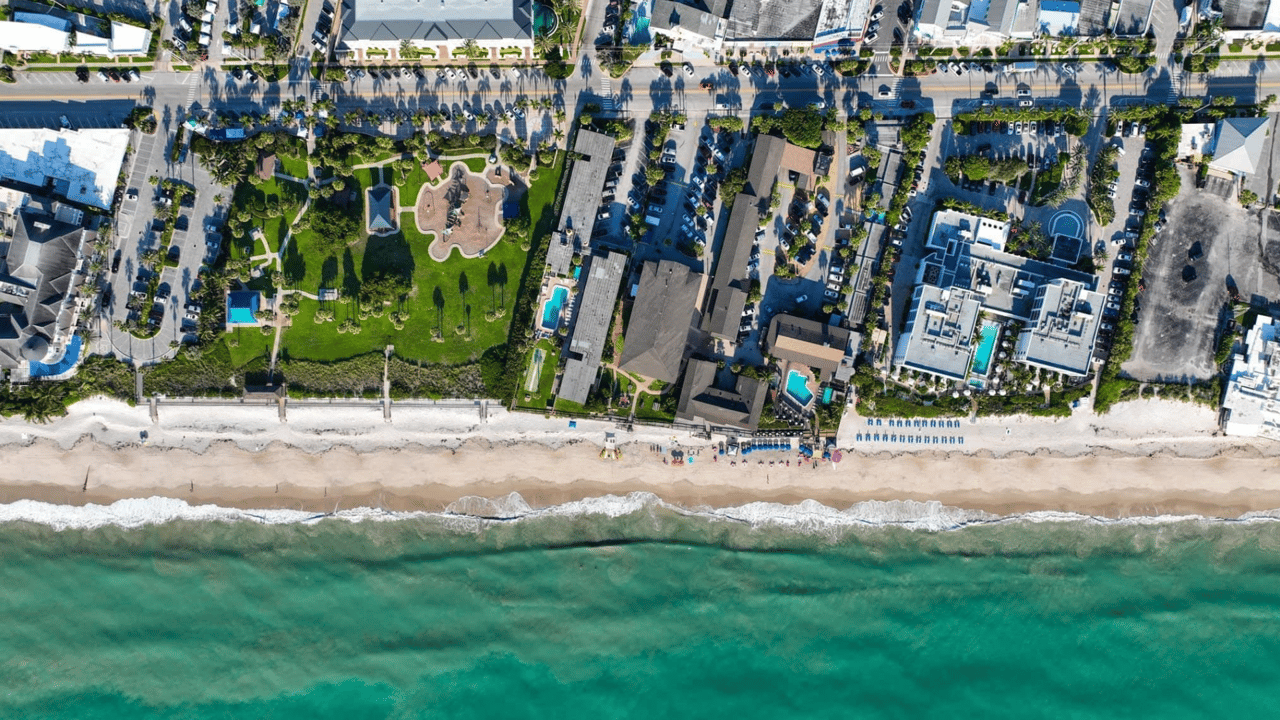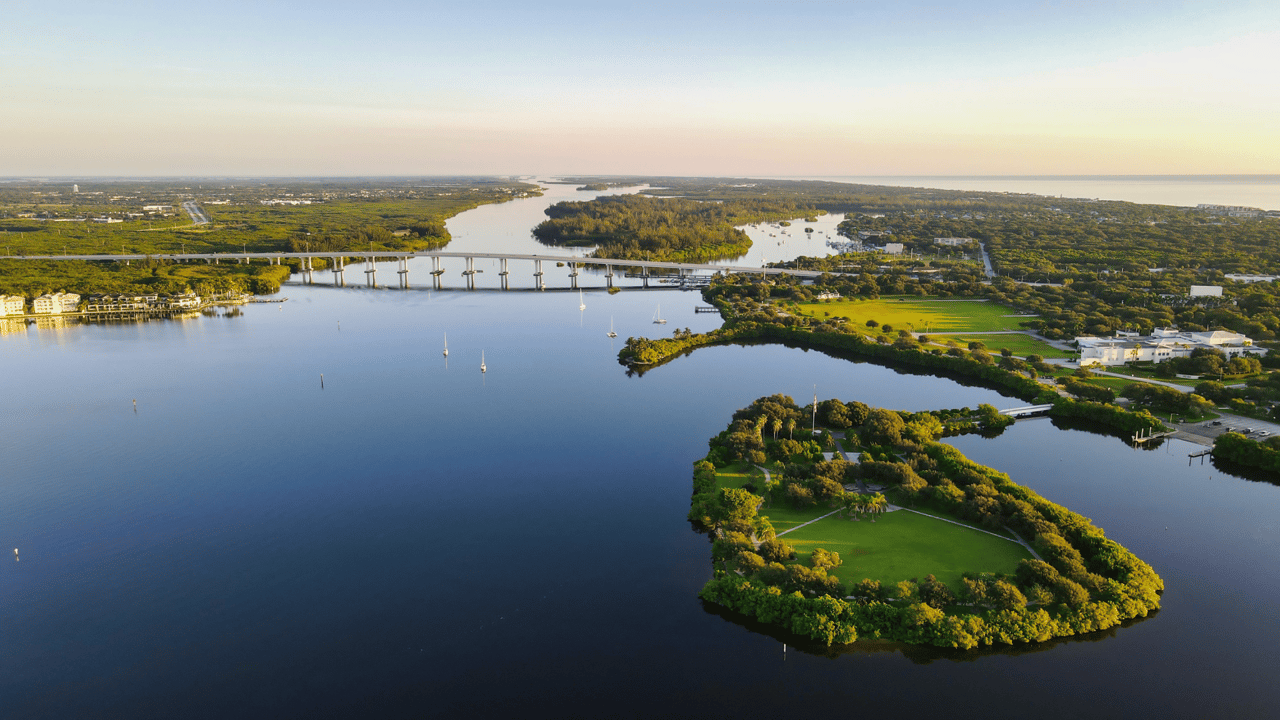
If you picture Vero Beach's Barrier Island waterfront living as only oceanfront views, you are missing a big part of what makes this area so appealing. Here, boating is woven into everyday life through the Indian River Lagoon, canals, marinas, mooring options, and island neighborhoods with practical water access. If you are considering a move or a second home, understanding how the boating lifestyle actually works can help you choose the right property with more confidence. Let’s dive in.
How Vero Beach's Barrier Island Connects to the Water
Vero Beach’s Barrier Island sits along the east side of the city, separated from the mainland by the Indian River Lagoon, a 156-mile estuary that connects to the Atlantic through five inlets. In Indian River County, Sebastian Inlet lies to the north and Fort Pierce Inlet to the south, shaping how boaters move between protected inland waters and the open ocean, according to Indian River County’s lagoon overview.
That geography matters when you are searching for the right home. Waterfront living on Vero's Barrier Island can mean more than direct ocean frontage. It can also include lagoon-front properties, canal-adjacent homes, finger-island settings, and neighborhoods where marina access is part of the lifestyle.
A City of Vero Beach historic survey also points to the area’s network of canals and the Main Canal, which empties into the Indian River north of the Merrill Barber Bridge. In practical terms, that adds variety to the waterfront options you may see as you explore island properties.
What Boating Access Looks Like
If you want to keep a boat close by, you do not always need a private dock. The Vero Beach Municipal Marina, located on the east side of the Indian River Lagoon north of the Merrill Barber Bridge, offers public slips, daily, weekly, and monthly moorings, dry storage, fuel, pump-out service, showers, trash disposal, and Wi-Fi.
The marina serves more than 3,000 visiting boats each year and about 20,000 overnights, which gives you a sense of how active the local boating scene is. Reservations generally require 48 hours’ notice, and the marina has separate storm and hurricane storage rules during hurricane season.
The city also operates a managed anchorage and mooring field. Established in 1988 and expanded in 1997, it uses a buoy-and-chain system with concrete piles or helix anchors. During the busier cruising season, boats may be rafted together depending on vessel size and weather.
Private Docks and Permits
A private dock can be a major convenience, but it is not automatic with every waterfront property. Indian River County requires permits before dock or pier construction begins, and the county limits dock projection to 25 percent of the width of the waterbody.
Shoreline-protection rules also shape what can be added along the water. In those buffers, allowed improvements are limited to docks, boat ramps, pervious walkways, and elevated walkways. If you are buying with plans to modify the shoreline, those rules are worth reviewing early.
Storage rules matter on land too. Some neighborhoods with HOAs rules prohibit residential watercraft and trailer storage, and front-yard storage is also not permitted. This is an important detail to take into consideration when you are comparing homes.
Why Tides Still Matter
Vero Beach is not a place with dramatic tidal swings, but tide levels still influence day-to-day boating. At NOAA’s Vero Beach tide station, the mean higher-high water is 0.89 feet above MLLW, the mean low water is 0.06 feet, and the mean tidal range is 0.89 feet.
For you as a buyer, that can affect how easy a canal, dock, or shallow route feels at certain times of day. A property may look ideal on paper, but boating access can feel different depending on water depth, location, and route out to the lagoon.
That is one reason waterfront home searches benefit from a practical lens, not just a visual one. The best fit is often the property that matches how you actually plan to use your boat.
Weather Shapes the Routine
In Vero Beach, weather is part of the boating lifestyle year-round. The National Weather Service’s marine forecasts for the Vero Beach area include local marine information such as tides and buoy observations for nearby coastal and intracoastal waters.
That means many boaters are checking conditions before deciding whether to stay in the lagoon or head toward an inlet. Even on a beautiful day, the decision is often about more than sunshine. Wind, nearshore conditions, and timing can all influence your plans.
Seasonality matters too. NOAA states that the Atlantic hurricane season runs from June 1 through November 30. If you own a boat or are considering a home with dockage, storm planning is part of responsible ownership.
Hurricane Planning Is Part of Ownership
Waterfront living here can be rewarding, but it works best when you plan ahead. The Vero Beach Municipal Marina maintains separate storm and hurricane storage policies, which reflects a broader reality of coastal ownership in Florida.
If you are buying a waterfront home, it helps to think through questions beyond the property itself. Where will the boat go during a storm? What are the community's storage rules? What is your plan if a named storm approaches, while you are out of town?
These are not reasons to avoid the lifestyle. They are simply part of making a smart, informed decision about how you want to live on the water.
Stewardship Matters on the Lagoon
The boating lifestyle in Vero Beach also comes with a stewardship mindset. Indian River County’s guidance for boating in the lagoon encourages owners to maintain engines to avoid leaks, secure trash, use pump-out facilities instead of discharging wastewater, anchor on sandy bottom, avoid seagrass beds, and operate in ways that protect wildlife and shorelines.
The county also directs boaters to FWC speed zones and manatee protection zones. For many buyers, this is part of what makes the lifestyle appealing. The lagoon is not just a backdrop. It is a living resource that shapes how people use and enjoy the water.
Shoreline care follows the same theme. Indian River County describes living shorelines as native-plant and natural-material alternatives to seawalls, and its living docks program uses oyster mats attached to dock pilings to support water quality and habitat.
What the Lifestyle Feels Like
Boating and waterfront living on Vero Beach's Barrier Island is often less about showy marina culture and more about ease, access, and rhythm. You may be the type of boater that heads out for a quiet cruise, or one that ships out to the inlets for off-shore fishing, all of which comes into play when choosing a home, since your property's waterfront access will dictate how and how often you will be on the water.
It is also a lifestyle that rewards local knowledge. The right home for one buyer may be a property with direct dockage, while for another it may be a Barrier Island home with easy access to marina services.
That is where a clear strategy matters. When you understand how boating access, storage, permits, tides, weather, and shoreline rules all work together, you can narrow your search around what truly fits your goals.
What Buyers Should Evaluate
If boating is central to your move, it helps to look beyond the view. As you compare homes on the Barrier Island, keep these questions in mind:
- Do you want a private dock, or would marina or mooring access work just as well?
- Do local dock and shoreline rules affect your future plans for improvements?
- How will tide range and shallow water affect your boat’s access?
- What is your storm-season plan for storage and preparation?
- Will you need space for gear, and do neighborhood storage rules affect trailers or watercraft at home?
- Do you prefer the convenience of a managed boating setup or the privacy of on-site dockage?
These details can make a major difference in how easy and enjoyable the lifestyle feels after closing.
Whether you are searching for a canal home, a riverfront property, or a Barrier Island residence that keeps boating within easy reach, working with an advisor who understands the local waterfront landscape can help you make a more confident move. If you are exploring boating-friendly homes in Vero Beach, The Sutcliffe Group offers concierge-level guidance shaped by local market knowledge, practical ownership insight, and a strategy-first approach.
FAQs
Do you need a private dock for boating on Vero's Barrier Island?
- No. The Vero Beach Municipal Marina offers slips, moorings, dry storage, fuel, and pump-out services, and the city also operates a managed mooring field.
Can you anchor a boat long term in Indian River County?
- Not indefinitely. Indian River County anchoring limitation areas limit anchoring to no more than 45 consecutive days in a six-month period in regulated areas.
Does every Vero Beach waterfront home include dock rights?
- No. Indian River County permit rules require approval before dock or pier construction, and shoreline-protection rules can limit what is allowed.
How important is weather for boating in Vero Beach?
- Very important. The National Weather Service marine forecast for the area provides local marine conditions, and NOAA states that Atlantic hurricane season runs from June 1 through November 30.
What makes Vero Beach Island waterfront living different from simple oceanfront living?
- The area’s waterfront pattern includes the Indian River Lagoon, canals, finger islands, marina access, and barrier island neighborhoods that support different kinds of boating-oriented lifestyles.